
Independent scholarship. Shared understanding.
Ancient texts.New discoveries.Shared with all.
We study the Pāli, Sanskrit and Chinese Buddhist canons, translate neglected works, and share what we find for the benefit of all beings.
A vast inheritance.
A continuing responsibility.
Three canons, read together
Pāli · Sanskrit · ChineseResearch you can hold
Our publishing imprint: Theravada Tipitaka PressA window into our research
Why do the old
meditation manuals
disagree?
Four, six, or eight stages of breathing meditation. A small difference opens a larger question: how did a shared practice develop as it passed between traditions?
Read the research noteThe comparison begins with the words of the texts themselves. Select a witness to explore its account.
- 01Counting算
- 02Following隨逐
- 03Fixing安置
- 04Observing隨觀
Four operations: count the breath, follow it, establish attention, and observe. The same sequence appears at the beginning of the sixfold account in T602.
Read the Chinese source ↗- 01Counting數
- 02Following隨
- 03Fixing止
- 04Observing觀
- 05Returning還
- 06Purifying淨
The sixfold account adds returning and purifying. Its vocabulary lets us trace relationships with both the northern Sanskrit manuals and the Theravāda tradition.
Read the Chinese source ↗- 01Countinggaṇanā
- 02Followinganubandhanā
- 03Touchingphusanā
- 04Fixingṭhapanā
- 05Observingsallakkhaṇā
- 06Turning awayvivaṭṭanā
- 07Purifyingpārisuddhi
- 08Looking backpaṭipassanā
Buddhaghosa makes “touching” a separate operation and closes the list with “looking back.” Eight terms reveal a different organization of the practice.
Explore the Pāli edition ↗From The Scripture on Ānāpāna, Appendices B–C. The counts describe textual schemes, not the number of breaths.
The shared sequence — and what it can tell us
The observation. The Vimuttimagga lists counting, following, fixing and observing. The received Ānāpāna scripture (T602) presents a sixfold account that begins with corresponding operations. The Visuddhimagga gives eight, placing “touching” between following and fixing.
The question. These agreements and differences let us investigate how the manuals organize practice. Where does attention meet the breath? Which operations belong together? A comparison of terminology gives us questions that can be checked in each source.
The limit. A shorter list does not, by itself, prove an earlier date or direct borrowing. A manual may abbreviate. Chronology requires further evidence from vocabulary, transmission and the surrounding instructions.
Sources: Vimuttimagga, T1648, fascicle 7; Ānāpāna scripture, T602; Visuddhimagga VIII.189. The comparison is developed in The Scripture on Ānāpāna, Appendices B–C.
From the study to the bookshelf
Careful scholarship.
Beautiful editions.
Complete translations, source texts and scholarly commentary. Published by our imprint, Theravada Tipitaka Press.
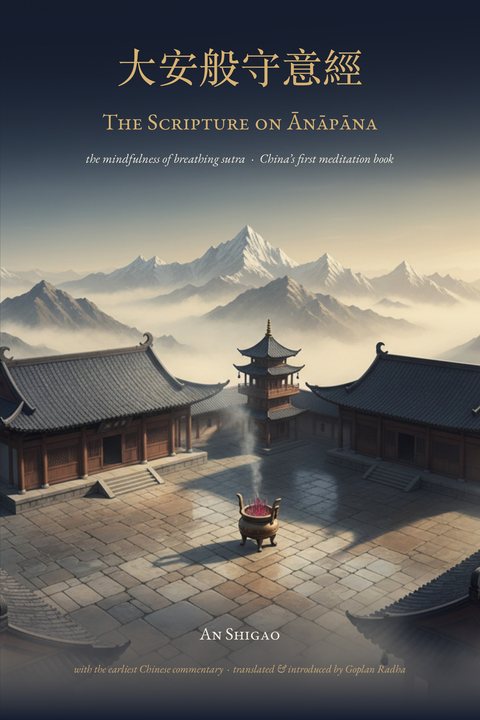
The Scripture on Ānāpāna
An Shigao’s breathing scripture, translated in full with its earliest commentary.

Foundations of Meditation Practice
Saṅgharakṣa’s complete course of practice, preserved in the Chinese canon.

The Vimuttimagga
Upatissa’s Path of Freedom: a reconstruction of the lost Pāli from its Chinese witness.
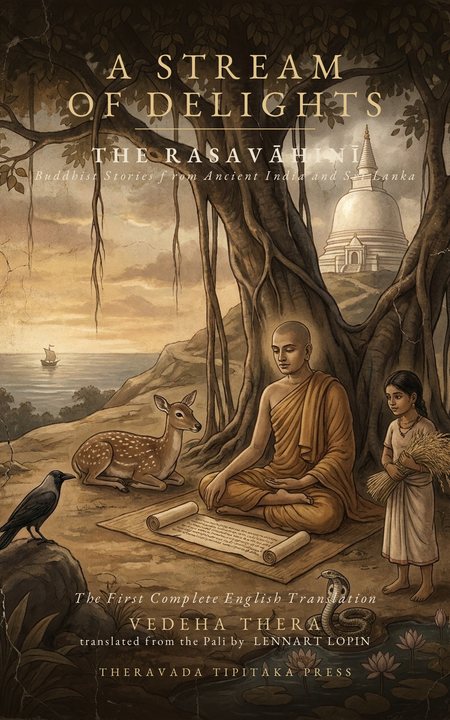
A Stream of Delights
All 103 stories of the Rasavāhinī, translated from Pāli into English.
The research programme
An open field
of inquiry.
We bring the Buddhist canons into conversation, with particular attention to the earliest texts. Our work takes the form of research notes, extended studies and complete scholarly editions.
01The earliest texts
Which passages preserve the earliest layers of Buddhist teaching? We examine vocabulary, verse metre and parallels across traditions, with particular attention to the Aṭṭhakavagga and Pārāyanavagga.
Read Buddha, before the Religion ↗02The history of meditation
The breathing scriptures and meditation manuals preserve different answers to practical questions. Reading them together helps us understand how instructions travelled, developed and survived.
Explore the Ānāpāna edition ↗03Stories across traditions
Similes, narratives and lives of the elders carry teachings across languages and centuries. We trace their witnesses and translate works from the Pāli and Sinhala literary traditions.
Explore the Rasavāhinī ↗The life of the Institute
At the
research table.
A good study often begins with something small: a word that resists translation, a passage that echoes across languages, an instruction that changes from one manual to the next.
We are building a daily rhythm of close reading, translation, and research roundtables: bringing interpretations into conversation, asking where they fail, and returning to the sources.
The rhythm we are building
-
Daily
Follow the questions.
Read across texts, trace a difficult term, compare translations. Bring a promising idea to the table, and give it a careful hearing.
-
Monthly
Give an insight its full argument.
Develop the strongest inquiries into studies, with their sources, competing explanations, and the questions that remain open.
-
Yearly
Leave something that lasts.
Gather sustained work into translations, books, and a growing body of scholarship that others can read, question, and build upon.
Research notes, papers, and editions, shared as they are ready. The research letter is free.

An invitation to support the work
Help the next work
reach the world.
Your support funds the patient work of research, translation and publication. Monthly patronage sustains the programme; individual gifts help bring particular editions into being and prepare them for free distribution.
100% of net proceeds support Buddhist research and publishing.
Every monthly tier includes 60-day early access to research papers as they are published. The research letter is free. Acknowledgments are always optional. Visit the reading room →
See what your support makes possible →
Our commitment: traceable sources, careful review, and corrections made openly. We welcome questions about the research and how your support will be used.
office@buddhism.institute ↗
Where the work matters
From the page
into a life.
A few minutes with a book before sitting down to practise. A teacher preparing a talk. A question shared in a meditation group. These are the moments our work is meant to serve.
Clarity for practice.
Careful translations help readers see what an instruction says, where it comes from, and where interpretations differ.
Depth for teaching.
Sources and commentary give teachers something they can check, explain, and discuss with their communities.
A way in for the next reader.
Translation carries texts across languages. Making research publicly available gives more people a way into them.
Your support helps turn careful scholarship into something a reader can carry into daily life.